Office XP and Outlook 2002 in Outlook to change the image of the entire enterprise deployment of the two main directions. First, you can not use a copy of Microsoft Office XP or Outlook 2002 to create an administrative installation point. Secondly, you must rely on the Outlook 2002 version of Microsoft Exchange Server, you have done.
Leaders have long-term use of the facility or the command to configure the network from the point of installation, all users can install Office or Outlook with the parameters stated. / Switch does not work in versions of Office XP, in view of launching a new program to combat piracy of software. Support for retail copies of each of the two machines to activate, the computer desktop and laptop computers.
Guide to complete the installation of Office XP, you need the enterprise version of the software, not the retail version. One of the main advantages of Enterprise Edition? Volume License Key you to customize the installation process for the supply of products, so that users do not need to activate through the process, because the demand for retail products.
Three Microsoft Office XP recruiting business through Microsoft Open, Select and Enterprise volume licensing program. Office XP Standard includes Word, Excel, Outlook and PowerPoint. Office XP Professional Edition includes all the apartments on a visit. Third Office XP Professional with FrontPage. In addition, you can expect Exchange 2000 Service Pack 1 (SP1) on the CD - ROM, which includes Outlook 2002, the administrative facilities and support may not need to include the user.
If you think your options for deployment, to seriously consider changes to the licensing of software, by volume, will be launched in October. Microsoft is the refusal of four hours of modernization (including increased competitiveness, not Microsoft), the number of customers, and a single software safeguards procedures (SA).
The research group Gartner has recently examined the new Microsoft products and permit fees, and found, you can break away from SA, even if you upgrade to a new version every 3-4 years. There is a chance to catch up to participate in the enterprises, organizations should use the current version of each product, in this particular case, Office XP. Gartner analysts believe that this requirement will be to convince many companies to accelerate the move to Office XP, to prepare a new licensing regime.
Showing posts with label Microsoft Outlook. Show all posts
Showing posts with label Microsoft Outlook. Show all posts
Thursday, July 16, 2009

Monday, July 13, 2009
Access to connectivity problems when using Outlook 2002.
Symptoms: - If you use Outlook, one or more of the following May, the question arises:
* The prospects are very slow.
* You can not open attachments.
* You can not open an e-mail, even if you can connect.
* Outlook stops responding or "hangs."
The main reason: - the east-south-east of the problem may be one or more of the following conditions:
* A TCP / IP problem Outlook client or the Microsoft Exchange Server.
* There are hardware problems, network equipment - such as cable or failure, incorrect configuration of the software or device drivers in May need to update or firmware. Network equipment in May of the following questions:
ö network interface card (NIC) on the client Outlook
ö map to Exchange Server
ö switching network
ö network routers
ö Network Firewall
* Driver to update the firmware or does not match your version of Microsoft Outlook.
Decision: - To solve these problems, attempt to determine if there is one that some, or all Outlook clients encountered symptoms.
* If some but not all customers affected, the network connection, the impact is only part of the network in May, is the root of the problem. To solve this problem, try the following:
ö find a cable or a bad connection.
ö whether the driver or firmware update can be used for routers, switches and firewalls in the network.
* If there is one of the interested clients, TCP / IP or the NIC on the client computer can be the root of the problem. To solve this problem, try the following:
ö Judge TCP / IP is the problem.
#
* Re-install TCP / IP.
* Updated network card drivers.
* Replacing the card.
# If all customers were affected, TCP / IP or the NIC in the Exchange Server may be the problem. To solve this problem, try the following:
* Define, in the TCP / IP is the problem.
# Re-install TCP / IP.
# Updated drivers for the NIC.
# Replace the NIC.
* The prospects are very slow.
* You can not open attachments.
* You can not open an e-mail, even if you can connect.
* Outlook stops responding or "hangs."
The main reason: - the east-south-east of the problem may be one or more of the following conditions:
* A TCP / IP problem Outlook client or the Microsoft Exchange Server.
* There are hardware problems, network equipment - such as cable or failure, incorrect configuration of the software or device drivers in May need to update or firmware. Network equipment in May of the following questions:
ö network interface card (NIC) on the client Outlook
ö map to Exchange Server
ö switching network
ö network routers
ö Network Firewall
* Driver to update the firmware or does not match your version of Microsoft Outlook.
Decision: - To solve these problems, attempt to determine if there is one that some, or all Outlook clients encountered symptoms.
* If some but not all customers affected, the network connection, the impact is only part of the network in May, is the root of the problem. To solve this problem, try the following:
ö find a cable or a bad connection.
ö whether the driver or firmware update can be used for routers, switches and firewalls in the network.
* If there is one of the interested clients, TCP / IP or the NIC on the client computer can be the root of the problem. To solve this problem, try the following:
ö Judge TCP / IP is the problem.
#
* Re-install TCP / IP.
* Updated network card drivers.
* Replacing the card.
# If all customers were affected, TCP / IP or the NIC in the Exchange Server may be the problem. To solve this problem, try the following:
* Define, in the TCP / IP is the problem.
# Re-install TCP / IP.
# Updated drivers for the NIC.
# Replace the NIC.
Wednesday, July 8, 2009
Delete a Message Stuck in the Outbox
If you try to send too much e-mail, your mail server, you may not be able to delete from the Outbox. Error dialog box will say, MAPI Spooler has already begun sending the message.
First of all, try to set up Outlook to use offline files, offline menu. Wait for about a minute or so, or shut down Outlook, then re-open.
If you are unable to delete the e-mail, and in the offline mode or can not enter the offline mode, you'll need to change your default location served.
The following steps are for Outlook 2002/2003, these older versions are the same, although the menu is different ..
1. Add a new PST file using the new, Outlook Data File menu.
2. Open the e-mail accounts dialog box on the Tools menu.
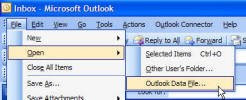
3. Select View or change existing e-mail account, and then click Next.
4.Select a new Personal Folders file to send new mail to the following location list.
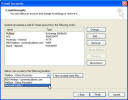
5.Click Finish and restart Outlook.
6. Display the folder list, use Ctrl 6, if necessary, and find the old me. Delete the message.
7. Repeat steps 2, 3, 4, 5, to restore the original default PST location service.
8. Show the Folder List and mobile e-mail of all new original new PST seconds.
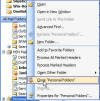
9.Right-click the new folder name and select Close to remove it from your personal data.
First of all, try to set up Outlook to use offline files, offline menu. Wait for about a minute or so, or shut down Outlook, then re-open.
If you are unable to delete the e-mail, and in the offline mode or can not enter the offline mode, you'll need to change your default location served.
The following steps are for Outlook 2002/2003, these older versions are the same, although the menu is different ..
1. Add a new PST file using the new, Outlook Data File menu.
2. Open the e-mail accounts dialog box on the Tools menu.

3. Select View or change existing e-mail account, and then click Next.
4.Select a new Personal Folders file to send new mail to the following location list.

5.Click Finish and restart Outlook.
6. Display the folder list, use Ctrl 6, if necessary, and find the old me. Delete the message.
7. Repeat steps 2, 3, 4, 5, to restore the original default PST location service.
8. Show the Folder List and mobile e-mail of all new original new PST seconds.
9.Right-click the new folder name and select Close to remove it from your personal data.

Friday, July 3, 2009
How can I add a button to the Microsoft Outlook toolbar to open a particular Web page?
Office XP and Office 2000 Toolbar buttons, including those in Outlook, and more versatile than you might expect. You can use them to launch a page or file follow these steps:
1. Choose View, Toolbars, Customize.
2. Drag any command from Commands to the toolbar.
3. Right-click the button you dragged and choose Assign Hyperlink from the context menu.
4. Type the Web page you want to go to, then click OK.
5. Right-click the button again, then change the rest of the properties (e.g., Name, Button Image) to suit you.
6. Close the Customize dialog box.
Clicking the button will open the Web page in your browser, not in Outlook.
In Outlook 2002, you can drag a Web page that you opened in Microsoft Internet Explorer (IE) to the Outlook Bar (not the program toolbar). Then, you can create a new link that opens in Outlook itself, not in the browser.
1. Choose View, Toolbars, Customize.
2. Drag any command from Commands to the toolbar.
3. Right-click the button you dragged and choose Assign Hyperlink from the context menu.
4. Type the Web page you want to go to, then click OK.
5. Right-click the button again, then change the rest of the properties (e.g., Name, Button Image) to suit you.
6. Close the Customize dialog box.
Clicking the button will open the Web page in your browser, not in Outlook.
In Outlook 2002, you can drag a Web page that you opened in Microsoft Internet Explorer (IE) to the Outlook Bar (not the program toolbar). Then, you can create a new link that opens in Outlook itself, not in the browser.
Tuesday, June 23, 2009
Add a custom category to the Outlook 97/98/2000 add holiday list
Does your company have special or unusual holidays such as company founder's day or winter break days? Would you like others in your organization to be able to add these holidays to their calendars easily? Here's how you can add a custom category in the Outlook Add Holidays to Calendar dialog box. (On the Tools menu, click Options, click Calendar Options, and then click Add Holidays.)
Add a category containing personalized holidays to the Add Holiday list
1.On the Windows taskbar, click Start, point to Find, and then click Files or Folders.
2.In the Named box, type Outlook.txt, and then click Find Now.
3.Right-click the file, and then click Open.
4.At the end of the file, start a new section by typing a custom category name inside square brackets and then typing the number of personalized holidays you plan to add to this section. It's important that this number is accurate.
5.Enter each holiday's name and date, separated by a comma, with the date in the format yyyy/mm/dd. When you're finished, the new section should look like the example below.
[2008 My Company Holidays] 7
Founder's Day,2008/07/20
Company Picnic, 2008/09/07
Winter Break (1st day), 2008/12/27
Winter Break (2nd day), 2008/12/28
Winter Break (3rd day), 2008/12/29
Winter Break (4th day), 2008/12/30
Winter Break (5th day), 2008/12/31
6.Save and close Outlook.txt, making sure that you save the file in Text Only format.
Now, when you display the Add Holidays to Calendar dialog box, you'll see your custom category in the alphabetical list. Select this category to automatically add these personalized holidays to your calendar. To make this updated list of holidays available to others, give them a copy of your Outlook.txt file and have them replace the default copy on their computer with the new one. Then, they'll see the added holidays when they click the Add Holidays button in the Calendar Options dialog box.
Add a category containing personalized holidays to the Add Holiday list
1.On the Windows taskbar, click Start, point to Find, and then click Files or Folders.
2.In the Named box, type Outlook.txt, and then click Find Now.
3.Right-click the file, and then click Open.
4.At the end of the file, start a new section by typing a custom category name inside square brackets and then typing the number of personalized holidays you plan to add to this section. It's important that this number is accurate.
5.Enter each holiday's name and date, separated by a comma, with the date in the format yyyy/mm/dd. When you're finished, the new section should look like the example below.
[2008 My Company Holidays] 7
Founder's Day,2008/07/20
Company Picnic, 2008/09/07
Winter Break (1st day), 2008/12/27
Winter Break (2nd day), 2008/12/28
Winter Break (3rd day), 2008/12/29
Winter Break (4th day), 2008/12/30
Winter Break (5th day), 2008/12/31
6.Save and close Outlook.txt, making sure that you save the file in Text Only format.
Now, when you display the Add Holidays to Calendar dialog box, you'll see your custom category in the alphabetical list. Select this category to automatically add these personalized holidays to your calendar. To make this updated list of holidays available to others, give them a copy of your Outlook.txt file and have them replace the default copy on their computer with the new one. Then, they'll see the added holidays when they click the Add Holidays button in the Calendar Options dialog box.
Thursday, June 4, 2009
Block Additional Attachment Types
This article describes how to configure Microsoft Outlook to block attachment file name extensions that Outlook does not block by default. If you use Outlook in a Microsoft Exchange environment, you can configure the server to block certain attachment file name extensions by using the Outlook E-mail Security Administrator Package.
Choose between two options:
Level1Remove -- slow down access to the zip by forcing users to save them to the hard drive before opening them.
Level1Add -- treat *.zips like *.exes to prevent access to them.
* Level1Remove
To Add file types to Level1Remove key:
1. Run Regedit, and go to this key: HKEY_CURRENT_USER\Software\Microsoft\Office\10.0\Outlook\Security (change 10.0 to 9.0 for Outlook 2000 SP3 or to 11.0 for Outlook 2003, 12 for Outlook 2007)
2. Under that key, add a new string value named Level1Remove.
3. For the value for Level1Remove, enter a semicolon-delimited list of file extensions. For example, entering this:
.zip;.mdb;.url
would force you to save Zip file type and unblock Microsoft Access files and Internet shortcuts.
* Level1Add
To Block file types using the Level1Add key: To add additional attachment file name extensions types that you want blocked, you must add the Level1Add key to the registry. To do this, follow these steps.
1. Run Regedit, and go to this key:
HKEY_CURRENT_USER\Software\Microsoft\Office\10.0\Outlook\Security (change 10.0 to 9.0 for Outlook 2000 SP3 or to 11.0 for Outlook 2003, 12 for Outlook 2007)
2. Under that key, add a new string value named Level1Add.
3. For the value for Level1Add, enter a semicolon-delimited list of file extensions. For example, entering this:
.zip
would treat the Zip file type like exe's and block access to them.
Thursday, May 28, 2009
Customize the Quick Access Toolbar
The Quick Access Toolbar is a customizable toolbar that contains a set of commands that are independent of the tab that is currently displayed. You can move the Quick Access Toolbar from one of the two possible locations, and you can add buttons that represent commands to the Quick Access Toolbar.
What do you want to do?
Move the Quick Access Toolbar
The Quick Access Toolbar can be located in one of two places:
* Upper-left corner next to the Microsoft Office Button. (default location)
* Below the Ribbon, which is part of the Microsoft Office Fluent user interface.
If you don't want the Quick Access Toolbar to be displayed in its current location, you can move it to the other location. If you find that the default location next to the Microsoft Office Button Button image is too far from your work area to be convenient, you may want to move it closer to your work area. The location below the Ribbon encroaches on the work area. Therefore, if you want to maximize the work area, you may want to keep the Quick Access Toolbar in its default location.
1. Click Customize Quick Access Toolbar.
2. In the list, click Show Below the Ribbon or Show Above the Ribbon.
Add a command to the Quick Access Toolbar
You can add a command to the Quick Access Toolbar directly from commands that are displayed on the Office Fluent Ribbon.
1. On the Ribbon, click the appropriate tab or group to display the command that you want to add to the Quick Access Toolbar.
2. Right-click the command, and then click Add to Quick Access Toolbar on the shortcut menu.
Notes
* You cannot increase the size of the buttons representing the commands by an option in Microsoft Office. The only way to increase the size of the buttons is to lower the screen resolution you use.
* You cannot display the Quick Access Toolbar on multiple lines.
Only commands can be added to the Quick Access Toolbar. The contents of most lists, such as indent and spacing values and individual styles, which also appear on the Ribbon, cannot be added to the Quick Access Toolbar.
What do you want to do?
Move the Quick Access Toolbar
The Quick Access Toolbar can be located in one of two places:
* Upper-left corner next to the Microsoft Office Button. (default location)
* Below the Ribbon, which is part of the Microsoft Office Fluent user interface.
If you don't want the Quick Access Toolbar to be displayed in its current location, you can move it to the other location. If you find that the default location next to the Microsoft Office Button Button image is too far from your work area to be convenient, you may want to move it closer to your work area. The location below the Ribbon encroaches on the work area. Therefore, if you want to maximize the work area, you may want to keep the Quick Access Toolbar in its default location.
1. Click Customize Quick Access Toolbar.
2. In the list, click Show Below the Ribbon or Show Above the Ribbon.
Add a command to the Quick Access Toolbar
You can add a command to the Quick Access Toolbar directly from commands that are displayed on the Office Fluent Ribbon.
1. On the Ribbon, click the appropriate tab or group to display the command that you want to add to the Quick Access Toolbar.
2. Right-click the command, and then click Add to Quick Access Toolbar on the shortcut menu.
Notes
* You cannot increase the size of the buttons representing the commands by an option in Microsoft Office. The only way to increase the size of the buttons is to lower the screen resolution you use.
* You cannot display the Quick Access Toolbar on multiple lines.
Only commands can be added to the Quick Access Toolbar. The contents of most lists, such as indent and spacing values and individual styles, which also appear on the Ribbon, cannot be added to the Quick Access Toolbar.
Subscribe to:
Posts (Atom)